I’m going to fight for myself
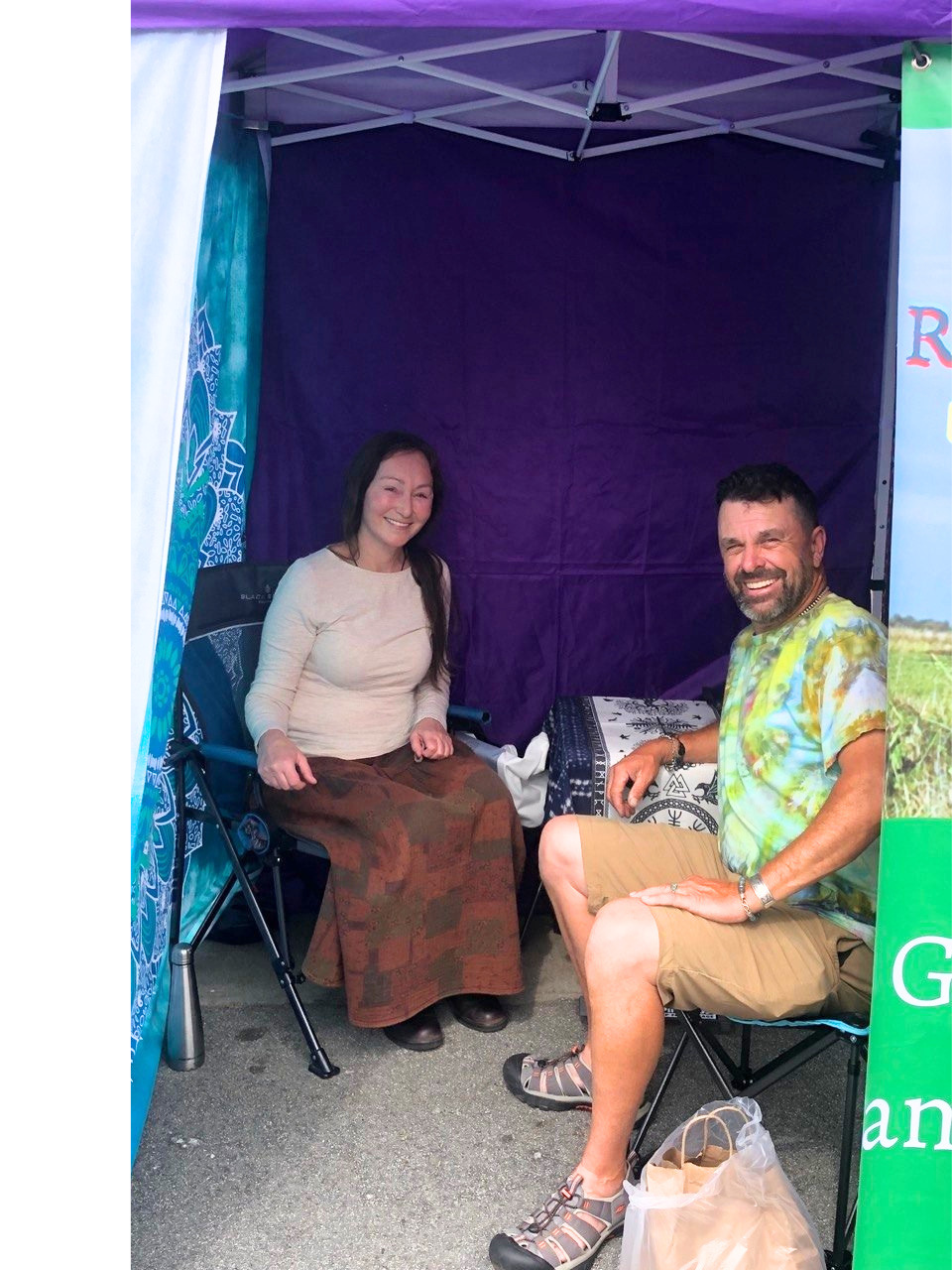
One day, a woman walked into my purple tent—the kind of person who usually comes to the Sunday market for vegetables, fruit, honey, and bread, not to sit down with me for clarity on whatever is going on in her life.
She was well in her seventies. Her life was established. She had investments, several rental properties, and from the outside it would have been easy to assume that everything was fine.
Women like her usually don’t walk into my little circus tent. They already have their own system in place—doctors, attorneys, financial advisors, people they call when something goes wrong.
That Sunday, I was working at the market as usual. I had just finished setting up my tent when I stepped outside and noticed a woman on the other side of the parking lot. She was looking at me as though something inside her was saying, Go over there, but she wasn’t quite sure.
I looked at her and smiled. She, as if she had stopped resisting, walked toward me.
She looked distressed. She was sweating from anxiety and almost shaking. She was in such a state that she was willing to try almost anything. That is how a woman in her eighties, who would normally have had no reason to walk into my purple tent, ended up sitting across from me.
She sat down and began telling me a story that sounded like a bad dream.
Her husband had died. She was living on income from a few rental properties they had invested in together years ago. One of her tenants was an attorney.
And now he was suing her.
That first day, she was so confused and overwhelmed that it felt as though life itself had simply blown her into my tent.
We talked for a long time. After looking at the situation, I told her that selling the apartment now did not look like the right move, it would only add to her stress. I was worried that if she kept pushing in that direction, she might end up in the hospital. I didn’t tell her that, I just suggested to take the apartment off the market.
About a month later, she came back. This time, she came specifically to see me.
She said, “At first I didn’t believe you. I thought, how can I not sell it? The easiest thing would be to sell the apartment and get this man out of my life.”
She tried to sell the apartment, but the tenant made it difficult. Showing it to a potential buyer required certain legal paperwork through her attorney, and every time that happened, it cost her hundreds of dollars. After several attempts to show the property this way, she did end up in an emergency room with heart palpitations and high anxiety... And then tenant made her an offer to buy the apartment himself—far below market value.
She began looking differently at everything that had happened over the previous months and suddenly she saw the whole picture.
All the expenses, restrictions, and pressure had been leading toward one point: the moment when she would become so exhausted and frightened that she would finally agree to his terms.
And something changed in this tiny woman.
She said to me, “I understood what you meant that day. I decided I’m not selling this apartment. I’m going to fight for myself.”
She decided to sell another property, raise the money that way, and fight for this apartment to the end.
The woman sitting in front of me was no longer the same person.
The first time she came in, stress had made her almost helpless. Now the strength she had probably carried through her entire life was back.
There was a spark in her.
A determination to restore justice for herself.
She is tiny. But she is a lion. I have enormous respect for her.
I told her I wanted to share it even in our small local community, because I think there is something here worth seeing. She was happy for me to do it and gave me permission to tell her story.
After meeting her, I started thinking about women of her generation, women now in their seventies and eighties.
They have lived enormous lives. They worked, raised families, built things with their husbands, saved money, bought property, invested—often for one very simple reason: so that when they became old, they would remain independent.
Today, we look at them and sometimes see only one word:
landlord.
She owns several apartments? Then she must be wealthy. Privileged.
And this is where something begins to happen to our ability to feel another human being.
I understand why laws exist to protect tenants. I know there are landlords who abuse their power. I am not trying to turn this story around and present landlords as some newly oppressed class.
But sitting in front of me was one particular woman.
She is is that last stage of her life now. Her husband is gone. She is alone. And now she has to navigate courts, attorneys, contracts, and a tenant who, because of his education and profession, understands that system far better than she does and knows how to use it. He is an attorney himself, so he can prepare his own legal paperwork. Every response on her side means another bill from her lawyer. And he decided to use that advantage.
Her pain was real. She told me how difficult it had been to find an attorney willing to defend a property owner, and that, from her perspective, the system already sees someone like her as a person who has enough money and enough property to protect herself.
And suddenly I saw how easily we do the same thing. We stop seeing the human being once we have decided which social category they belong to.
Tenant—vulnerable. Landlord—powerful.
Poor—deserving of compassion. Rich—they’ll be fine.
But human life does not work that way.
Sometimes behind the word landlord is a tiny woman in her eighties, shaking from confusion and powerlessness.
And sometimes the most important thing you can do for her is to help her find her own strength again.