

The Art of being Conscious in this Hay universe
Elena V Nezhinsky's Blog

My dear friends! I have been on some kind of marathon for the last three months I’ve been working on so many projects that I honestly never knew I had this kind of capacity! I have insight after insight after insight, each one somehow turning into the next project... and then I actually finish it! Unbelievable :) After years of really struggling to find my place in the system without losing my freedom, I found it. Over the last year, everything I had gathered in myself finally found its form in the way I work with people. My style of working is pretty simple, I can describe it as I love depth, but I don’t like heaviness I’m not interested in building an extra temple of terminology, status, and importance around difficult things. If something really matters, it can survive normal human language. I can talk with someone about legacy, crisis, purpose, money, relationships, death, transformation, and there may very well be a bowl of borscht sitting nearby. It’s a joke :) But not entirely, because my new book actually has borscht on the cover! just published a little book called Clarity Sessions with Runic Diagnostics: How I Work. On the cover, a person is climbing a mountain carrying a huge backpack of questions, as if he is on some great spiritual pilgrimage and at the top, there I am in an apron: “Come in. Sit down. Want some borscht?” I like it when the spiritual is not separated from ordinary life. When meaning is tested by what happens in the body, in relationships, in work, in money, and in an actual choice. I’m not very interested in telling people how much of an expert I am. I’d much rather show the work in action — through a story, a conversation, a turn, a moment when something suddenly becomes visible. That’s probably why the idea of a little book feels so right to me: not to tell someone who I am, but to let them spend a little time inside the way I see. The book includes real cases from my sessions, with all identities and identifying details protected. Clarity Sessions with Runic Diagnostics: How I Work was published on October 21, 2026, and will soon be available on Amazon in paperback and ebook editions. The price only covers production and distribution; I don’t make money from this book. It will also be available as a FREE download from my website. And if you read the book and like it, please leave a review on Amazon. Reviews always help. And special thanks to Jason Kolano Your illustration you made for me years ago finally found its book!
I keep seeing one very simple thing more and more clearly: what interests me most in life is systems, connections, and integration. Not isolated facts by themselves, and not even isolated events. I am always interested in seeing how one thing connects to another, why something happened the way it did, what pattern is behind it, and what is part of something larger. Maybe that is why every system I have ever gone deeply into has, in some way, opened me to myself. It has happened with different systems over the years, and now it is happening with the runes. Writing Walking the Runes is integrating me in a completely new way. On the surface, I am writing a book about the runes. But through each rune, I am also looking at my own life again. Things that once seemed like separate stories begin to connect. I can see why I made a particular choice then, why in another situation I could not have acted differently, how one decision was connected to another, what kept repeating, and where a real transition took place. That is probably one of the things I enjoy most. Several completely different things suddenly become one picture. Pieces that used to sit separately begin to connect, and I can see how the whole thing is structured. I love people. I love traveling. I can happily go somewhere, meet someone, sit and talk for hours. But if I had to choose what truly lights me up, it is this: seeing the connection, having an insight, putting the system together, and feeling something inside become whole. And maybe the most interesting thing about my life now is that it is finally arranged in a way that allows me to do this almost all the time. Not on the side. Not when I have some energy left after taking care of another life that has to be maintained. This is the life itself now.
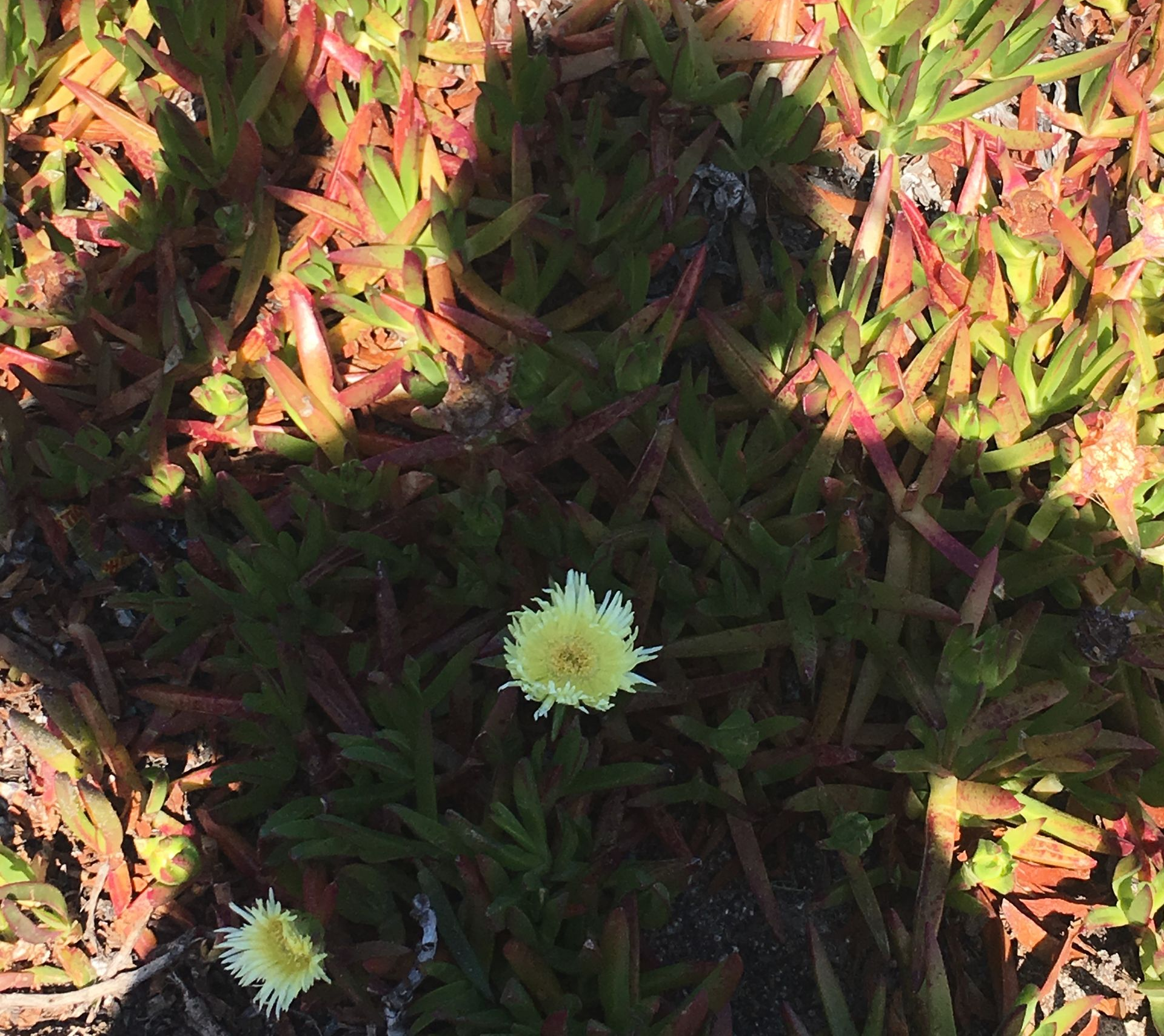
The natural world is filled with patterns. You can see them in the veins of a leaf, the spiral of a shell, the branching of trees and rivers, and the movement of larger natural cycles. Forms that appear separate are often expressions of the same underlying principles. Human beings have always observed these patterns. In conventional science, we study them through fields like biology and physics. We also developed symbolic systems to describe relationships that were otherwise difficult to see. Astrology looks at relationships between planetary cycles and human experience. Other systems work with numbers, geometric forms, images, or ancient symbols. The runes are the symbolic language I use in my work. I see the architecture beneath the visible problem: opposing forces, hidden motives, blocked movement, unrealized possibilities, and connections between events that may appear unrelated. Then we bring that information back into the person’s actual life. We ask questions. We examine what fits and what does not. The runes reveal the pattern; analytical thinking and direct human conversation help us understand what it means in concrete reality. An example: A person may come to me because they are trying to make a decision about work. On the surface, the question seems simple: stay or leave. But the pattern may show that the real tension is not between two jobs at all. One part of the person is trying to preserve safety and belonging, while another part is pushing toward independence and a different way of living. What looks like a career decision may be connected to an old family pattern, a fear of disappointing someone, or a part of the person that has been waiting for years to move. Then we look at the person’s actual life. What is happening now? Where has this tension appeared before? Is the same pattern showing up somewhere else? What changes when the person sees the problem from this angle? The runes do not replace thinking. They give us another way to see the structure of the situation.

There are times when I make plans and try to understand where something is going, and then there are times when a door simply opens. About a year ago, I had a dream in which I was told very clearly that I would be doing Runic Diagnostics and that this was how I would support myself financially. By that point I had already spent decades doing inner work. I had more than 10,000 hours of meditation behind me, years of working with different modalities, a great deal of experience with people, and quite a bit of life itself. But somehow there was still something missing in the way all of that could come together when I worked with another person. Runic Diagnostics became that missing piece. They gave me a way to enter a situation very quickly and see what was operating underneath what a person was telling me. The runes did not replace everything I already knew. They gave structure to it. Suddenly all those years of experience had a very practical doorway into another person's life. Last year I spent learning. I studied the energies, practiced diagnostics, worked online with people I knew and people I didn't. Then I was invited to a Russian festival in Southern California, and that weekend changed something. For three days people kept coming. I was working face to face for the first time, and there was almost no pause between sessions. Soon afterward I began working regularly at local farmers markets. For the past seven months, most of my attention has been here, locally. I have been meeting people under my purple tent, writing in local Facebook groups, learning how this work actually lives outside my own head and in real human encounters. I wasn't thinking globally. I wasn't trying to build an audience somewhere far away. I was simply opening a space for this work where I live. And then, almost by accident, I found a Facebook group for Russian-speaking women living all over the world. I joined for a very simple reason. Two of my books are coming out in Russian, and at some point it occurred to me that I had almost no Russian-speaking audience. So I just sat down, wrote it, added one photograph, and posted it. The response surprised me. The post reached around 32,000 views, more than 16,000 viwers, and about 5,500 engagements. But the numbers themselves were not the most interesting part. A few days later I wrote a second post, this one much longer and much more personal. I knew perfectly well that many people would never read something that long on Facebook, and some didn't. One woman wrote that it was too long. Another said it was too abstract. And then someone else wrote that she had read the entire thing in one breath. Another said, “This was exactly what I needed to read today.” People began answering from inside their own lives. By the next morning, that long post had already created around 1,500 engagements, and by this time it became 3000, not views, but people actually read, replied or shared, and something became very clear to me. A completely new space had opened. I had not gone looking for thousands of Russian-speaking women. I had not made a plan for reaching them. I wasn't even thinking about offering my work to them. My intention was much simpler: I have two books coming out in Russian, and they need readers. That was all. And suddenly there they were. Thousands of potential readers who had not existed anywhere in my visible world a few days earlier. I don't really know how to explain moments like this. We can always make up explanations — algorithms, timing, synchronicity, intention, probability, the universe. Maybe it is some combination of all of them. I don't know. What interests me more is the way these things sometimes happen when something has become ready. You spend a long time working without knowing exactly where the work belongs. You learn, make mistakes, become more precise, keep showing up, and slowly something takes form. Then one day you touch one small point somewhere, almost casually, and an entire space opens behind it. It feels almost like a fractal. The same pattern that began with one person sitting across from me under a purple tent suddenly appears on a completely different scale. I didn't create those thousands of women. They were already there. Until now, we simply couldn't see each other.

Very few people see me at the market and immediately come in to work with me. Someone may walk past my Purple Tent several Sundays in a row. Sometimes they stop for a second and look, sometimes they keep walking. Then one day they come in and say, “I see you here every Sunday, and there always seems to be someone sitting with you.” By then, I’m no longer completely new to them. Something has had time to settle. I don’t stand outside the tent trying to bring people in. I don’t call anyone over. I’m simply available. This is how my work tends to grow in general. People often read my articles and posts for a while before they contact me. They may also read one of my books or hear about me from someone they know. When people come back, the work is usually easier and often deeper. They already know the process, they trust me, and I already know something about their life and how they move through it. We can get to the real thing much faster. My work doesn’t grow through constantly finding new people. It grows through familiarity — through someone seeing me again and again, reading something I wrote, hearing about me from a friend, working with me once, and coming back months later with a question. The relationship develops over time.
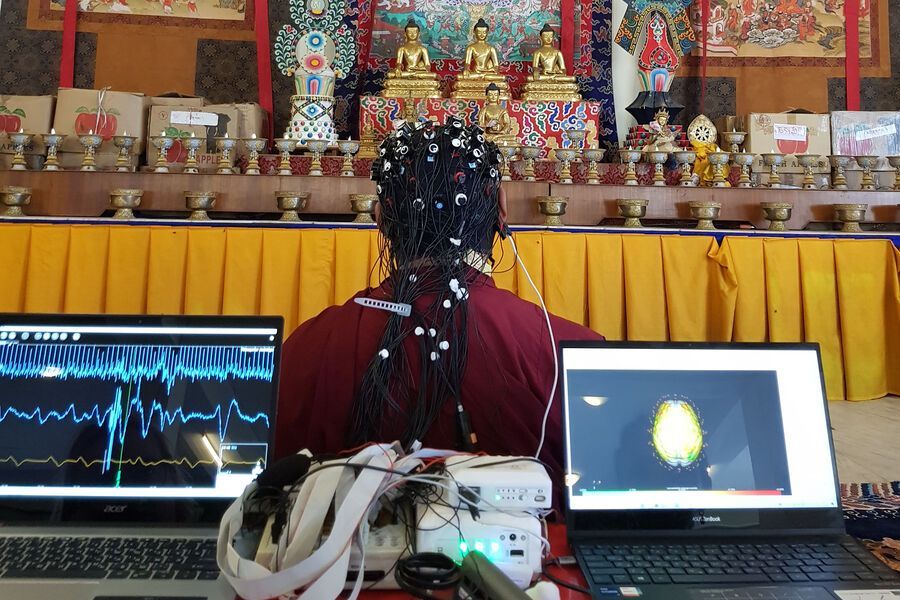
The Mystery of Tantric Meditation Revealed? MSU Researchers Report Findings from Studies of Tibetan Monks Psychophysiologist Alexander Kaplan: “For the first time, we have obtained objective markers of subjective states.” Russian neurophysiologists have announced the first results of a multi-year project studying tantric dissolution meditation in Buddhist monks directly in Tibetan monasteries. The researchers recorded the monks’ brain activity using electroencephalography (EEG). The findings were significant enough to be published in Scientific Reports, part of the Nature portfolio. Alexander Kaplan, Doctor of Biological Sciences, professor and head of the Laboratory of Neurophysiology and Neurocomputer Interfaces at Lomonosov Moscow State University, spoke about what the researchers have discovered over several years of work. How did you become involved in studying meditation in Tibetan monks? In 2018, during a meeting with Russian neurophysiologists at his residence in Dharamsala, His Holiness the Dalai Lama proposed creating a joint scientific project devoted to studying the nature of the human mind through research into the brain mechanisms involved in Buddhist meditation. We began the project that same year. I became especially interested in a particular class of meditation — practices of Highest Yoga Tantra aimed at individual transformation. These extremely complex practices contain a fascinating process. First, the monk mentally visualizes himself in the form of an enlightened deity, and then gradually “dissolves” that image. For practitioners of Tibetan Buddhism, the goal is not simply to withdraw attention from the external world, but to learn to move into deeper layers of the mind, eventually reaching a particular state known in Buddhism as clear light . Buddhists maintain that the “clear-light mind” naturally appears during such transitions as falling asleep, waking up, and dying, among other circumstances. Tibetan monks train themselves to recognize this state and to use it in spiritual practice. Throughout their lives they practice this recognition, believing that spiritual practice performed in this deepest state of mind can lead to profound spiritual realization. The monks most skilled in these meditations became our volunteer research subjects. Is this meditation a single practice, or does it consist of separate stages? According to ancient written sources, the dissolution process in tantric meditation consists of eight stages, the last of which is called “clear light.” Monks in tantric Buddhist monasteries follow the same traditional sequence. For a scientist, this is an extraordinary opportunity: we have a standardized mental procedure being performed by all the participants. All that remains is to place sensors on the monks and observe how brain activity changes as they move progressively deeper into their own minds. And these are people who have practiced for ten, twenty, sometimes forty or fifty years. The difficulty was that tantric monasteries had traditionally been closed to researchers studying brain mechanisms. Recommendations from His Holiness the Dalai Lama, together with the participation of the Russian Nalanda Foundation, opened the doors of tantric monasteries to researchers — although, at present, only to my group. How did you formulate the scientific purpose of the project? No matter how long humanity studies the brain, one of its greatest mysteries remains the same: how does the activity of purely physical nerve cells, electrical impulses, neurotransmitters and other biological mechanisms generate the psychological world of a human being — the subjective reality in which we actually live? From the perspective of practical neurophysiology, we can ask which brain structures, and in what sequence, participate in the activities of the mind. How are mental images created? How is a mental reality constructed from those images? How are emotional states such as love, compassion, joy and grief formed? Which brain structures or networks sustain subjective experience itself? And ultimately, what are the brain mechanisms underlying transformation through tantric practice? The Buddhist monks from monasteries in India, Nepal and Bhutan were not merely our experimental subjects. In a real sense, they became collaborators in this work. Why monks? Wouldn’t artists, architects or writers also be suitable? People in creative professions certainly tend to have strong — sometimes exceptional — capacities for imagination, intuition and visualization. But scientifically they make difficult subjects because every person has a different style, a different skill set and a different developmental history. How do you draw conclusions from such variability? Tantric Buddhist monks, by contrast, have been raised within the same traditions, studying the same texts and training in the same monasteries. For more than six hundred years, generations of Buddhist monks have practiced the same tantric meditation known as Guhyasamaja. During each session, the monks visualize themselves as this Buddhist deity — with three faces and six arms — in extremely precise detail. Then they slowly dissolve that image and other elements of their mental reality. Where else could I find such extraordinary subjects for research into the nature of the mind? Does it really matter that Tibetan monks have trained their imagination for generations? What if you simply asked ordinary people to visualize the same deity? In our university research into the brain mechanisms of imagination, we asked students to imagine closing the fingers of one hand into a fist while we examined which regions of the brain showed changes in electrical activity. This is an extremely simple task, and the expected result has long been known: so-called mu activity should decrease in the motor regions associated with the hand. Yet we observed the expected EEG response in only about 30 percent of the students. Another 30 percent developed the ability after practicing for a week or two. The remainder never demonstrated strong enough motor imagery. And that was only the image of their own hand. The monks are visualizing something vastly more complex. Moreover, they do not simply imagine the form of a deity. At the same time, they attempt to embody within themselves the exceptional positive human qualities associated with that deity. How many monks have you studied over these eight years? At this point we have recorded, analyzed and published results from approximately forty-five monks practicing Highest Yoga Tantra. No other group in the world has a comparable dataset suitable for this kind of systematic research. But collecting it is difficult. Every year we organize two or three expeditions to monasteries in India, Nepal and Bhutan. Even then, a single expedition may yield usable recordings from no more than ten monks. Monks who practice Highest Yoga Tantra are relatively rare within the overall monastic population. They may also be in retreat, where we cannot reach them, or traveling between monasteries. For statistical analysis, we ideally need groups of forty to fifty practitioners for each variation of these meditation practices. We currently have another fifty to sixty recordings being processed and analyzed from monks practicing related meditations within other traditions and procedural frameworks. What about hermits who do not live in monasteries? Have you worked with them? Yes. Hermit monks are often among the most advanced practitioners of tantric meditation. Many live outside monasteries, sometimes high in the mountains in extremely remote locations, so that they can devote their entire lives to practices involving deep exploration of the mind and of their lived experience. We organized a scientific expedition to Ladakh, in the Himalayan foothills of northern India, where hermits have long lived at altitudes of around four thousand meters. It was not easy. We needed recommendations not only from His Holiness the Dalai Lama but also from the teachers directly responsible for these hermits. The hermits were scattered across different locations in Ladakh, so we traveled to visit them carrying backpacks full of research equipment. So far we have obtained approximately ten to fifteen recordings. We have also recorded meditation sessions from hermits living in special retreat centers near the residence of His Holiness the Dalai Lama. In our search for highly experienced practitioners of deep meditation, we also conducted an expedition to the Kingdom of Bhutan, visiting remote monasteries where monks devote nearly all of their time to contemplative practice. How many electrodes do you place on the head when recording EEG? In my university laboratory we can use as many as 256 electrodes. But installing that many electrodes takes a great deal of time. For an experienced monk, waiting for a long experimental setup is undesirable because by the time he arrives for the study he is already mentally preparing for meditation. So in field conditions inside monasteries, we normally use approximately forty-five EEG electrodes. In addition, we use sensors to measure oxygen concentration in the cerebral cortex through functional near-infrared spectroscopy, or fNIRS, across fifty-four locations. With assistants, we can install everything in approximately twenty minutes. Then recording begins, the monk starts his meditation, and we leave the room until he tells us that the practice is complete. The duration varies greatly: from fifteen minutes to an hour and a half. What was your hypothesis? What were you hoping to see in the EEG signals and measurements of oxygenation in the brain? According to the structure of tantric practice, monks pass through eight stages in which mental images are progressively dissolved. In scientific terms, they move through eight successive psychological states, gradually freeing the mind from layers associated with the external physical world — images, thoughts and forms — until reaching what the tradition describes as an entirely pure state of mind: clear light. My hypothesis was that these transformations of subjective experience would have a physical reflection in the signals recorded from the brain. If traces of these stages could be detected in EEG and fNIRS signals, we might then begin to understand which brain structures participate in the subjective movement from more superficial states of mind into deeper ones, ultimately reaching the mysterious state called clear light. In that state, according to hints in Buddhist texts — and, admittedly, some scientific imagination on our part — the integrated experience of a human life may manifest itself. So you were trying to distinguish a meditating brain from a non-meditating brain using EEG? No. Comparing “meditation” and “non-meditation” is largely meaningless if we are talking about a rigorous scientific approach. Meditation is a form of reflection on the nature of one’s own subjective world. Certainly we can distinguish EEG patterns associated with active thinking from those associated with relaxed wakefulness. But EEG cannot simply tell us whether a person is thinking about advanced mathematics, a summer vacation or the nature of their own mind. And these EEG characteristics vary greatly from person to person regardless of whether someone is experienced in meditation or in writing poetry. Our task was different. We wanted to observe how brain activity changed while a tantric practitioner moved from ordinary perception of the physical world toward the state known as clear light. We hoped that, over the course of the meditation, the EEG recordings might reveal several different types of segments that could approximately correspond in number and duration to the stages of dissolution described in tantric practice. Two scientific papers have now been published, with the most recent appearing in Scientific Reports. What were you able to demonstrate? First, our central hypothesis was supported. In the EEG of a monk engaged in dissolution meditation, we were able to identify a relatively small number of distinct segments — usually between six and ten — occurring sequentially and clearly distinguishable by quantitative EEG characteristics. Because similar segments appeared in almost all of the several dozen monks studied during meditation, we cautiously proposed that these EEG segments may reflect stages of tantric meditation. The next question was whether a segment identified in one monk resembled segments identified in other monks. Across the study we analyzed 341 quantitative EEG features. You mean characteristics of brain waves? Have you abandoned the traditional beta, theta, delta and alpha rhythms? Not at all. We simply analyzed the frequency structure of EEG in much greater detail, at intervals of 0.5 Hz. We also included many additional quantitative characteristics: correlations between pairs of EEG channels across different frequency ranges, phase shifts between EEG signals in different channels, and other measures. This detailed quantitative analysis allowed us to identify the segments we were looking for. Each segment was defined by a distinctive combination of characteristics, including frequency-related ones. And were these different EEG segments similar across different monks? Yes. That was the crucial question. Across all of the monks we identified more than four hundred segments. It was entirely possible that each monk would have his own unique pattern of segments. If that had been the case, it would have been difficult to reconcile with the fact that all of them were performing the same structured meditation. But we were fortunate. This became our second major finding: every one of those several hundred segments could be assigned to only eight basic types . That strengthened our hypothesis that these recurring EEG patterns may reflect the same stages experienced by practitioners during tantric meditation — stages leading toward the clear-light state. Did these EEG segment types appear in the same sequence in all monks? In principle, they could have appeared in completely different sequences. Imagine labeling the segment types A, B, C, D and so on. One monk might show the sequence BDACFEHG, another EGAFCBHD. There are more than forty thousand possible combinations. With thirty-five monks, it would have been entirely possible for every monk to display a unique sequence. Had that happened, it would have cast doubt on the idea that these sequences correspond to the eight traditional stages of meditation. But this is where we encountered our most important result. Instead of tens of thousands of possible combinations, we found only six typical combinations of EEG segments. This suggests that monks may perform this particular practice somewhat differently, combining or moving through stages in several characteristic sequences. We identified six groups of monks. Were those groups different from one another in any meaningful way? Very much so. Two of the groups were composed, by about 80 percent, of monks with the greatest meditation experience — those with the largest number of retreats and the longest histories of practice. At the same time, two other groups contained no monks with extensive practical experience at all. This led us to the conclusion that we had identified EEG characteristics that reflect not only the process of meditative dissolution itself but also differences associated with the practitioner’s level of experience. Has this been done for the first time? Yes. These findings offer the first objective glimpse into the processes occurring during tantric dissolution meditation. And because my group is currently the only research team working inside these tantric monasteries, we also possess the largest EEG database in the world devoted specifically to tantric meditation. We are willing to share it. What do these results tell us more broadly? They suggest that unusual states of mind — including the sequential states occurring during tantric dissolution meditation — have measurable correlates in the physiological activity of the brain. Deep meditation can therefore have real psychophysiological consequences and may alter the functional organization or “settings” of brain systems. This may help explain some of the positive psychological changes observed in long-term tantric practitioners. Our next step will be to determine specifically which brain structures and which EEG characteristics are involved in particular stages of tantric meditation. Perhaps this work will bring us somewhat closer to a broader theory of the brain, a deeper understanding of human nature, and eventually to understanding how useful meditative techniques might be applied by ordinary people. Author: Anna Urmantseva Photographs from the personal archive of Alexander Kaplan
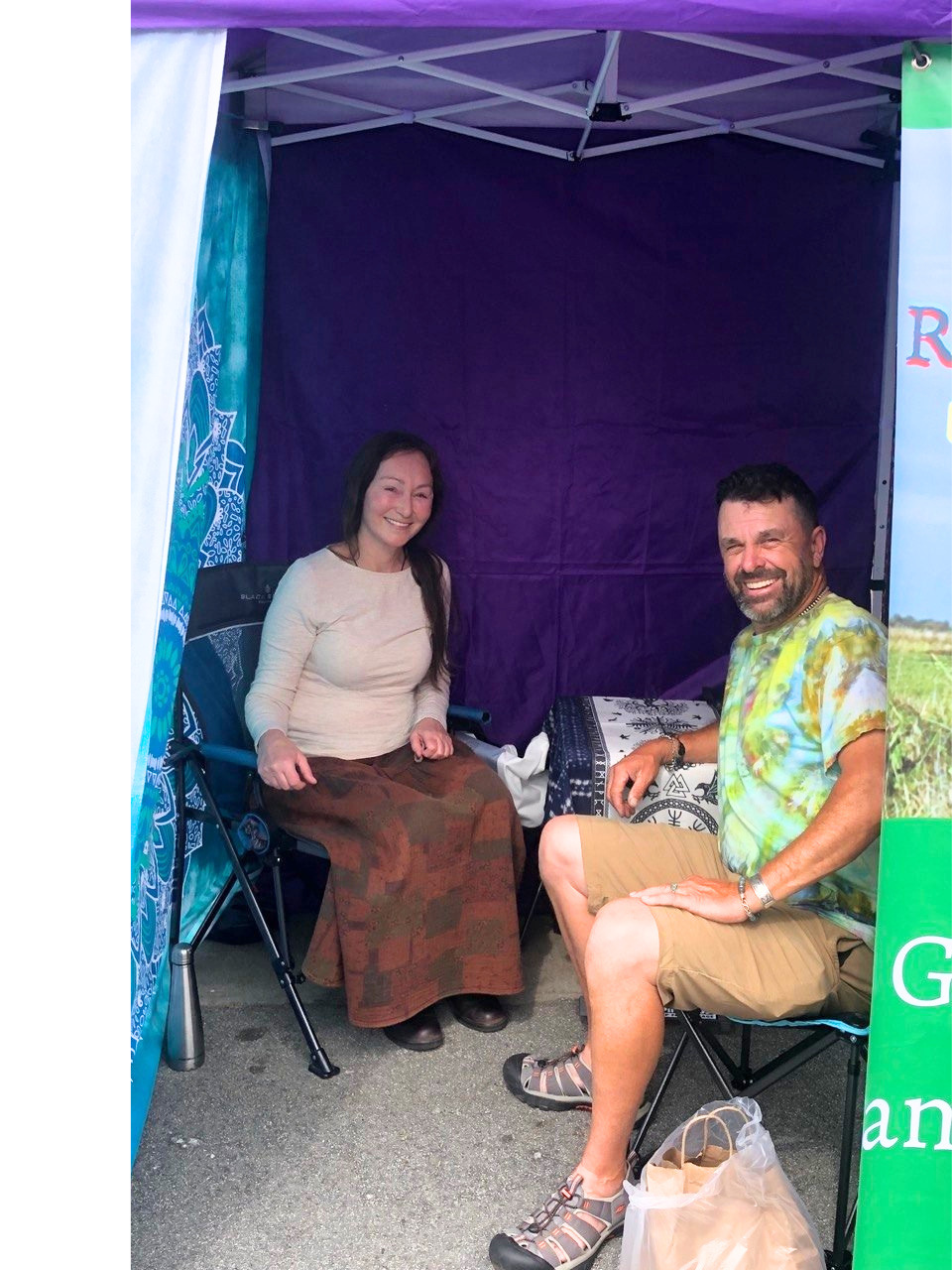
On Sunday morning, as I was getting ready to go to the farmers market, Anthony looked at me and said: “Time to hit the pavement.” I started laughing because, in a strange way, that sentence describes my entire career trajectory. Years ago, I worked in the spiritual world, but I eventually realized I wanted my work to be much more grounded in ordinary life. For a while, I didn’t know what that was supposed to look like. I still had to make a living, but I didn’t want to go back to the kind of work I had already left behind. Eventually I understood that refusing to participate in the game at all wasn’t the answer. I needed to learn how to play it differently. Years later, I had a dream telling me that I would be doing Runic Diagnostics and that this was how I would support myself financially. That eventually led to farmers markets, Clarity Sessions, and a little purple tent on a parking lot. These days, “hit the pavement” is not even a metaphor. I literally sit in a purple tent on a parking lot, on the pavement, talking with people about relationships, work, money, fear, children, decisions, and whatever else life has dropped in their lap. Occasionally I shuffle some little wooden sticks around. Quite a career move :) But maybe the work itself hasn’t changed as much as it looks. I am still interested in the same thing: what is actually happening here, beneath the stories we tell ourselves? The difference is that now the investigation happens right in the middle of ordinary life. Time to hit the pavement.
I’ve been thinking about what material support really means. Usually we think of money, property, a house, savings, steady income. But for me, that isn’t enough. Good material support is something that does not consume my energy and does not leave me powerless. That sentence landed exactly on something I had felt for a long time but had never put into words. I’ve already owned a house. I know what it means to have property, maintain it, pay for it, and be responsible for it. And yes, I would happily live in a beautiful house again — somewhere I could work in peace, close the door, and not have to think constantly about the practical side of life. But owning a house itself is not the goal. If a house requires me to spend twenty years saving for it, constantly thinking about the mortgage, repairs, taxes, maintenance, and turning a large part of my life into supporting that structure, I’m no longer sure it is support. It may be the other way around: the house is not supporting me. I am supporting the house. That does not work for me. A cabin could work. A small house on someone else’s land could work. A home on wheels could work. A private space near people with whom I have connection and mutual support could work. What matters to me is something else: quiet, fresh air, privacy, the ability to close the door and work. A place where my body can relax. A space that supports me instead of requiring constant effort from me. I don’t need complete independence from other people. I don’t really believe in that kind of independence. None of us is completely independent. We all live inside networks of support — through people, work, land, skills, and relationships. What feels much closer to me is another formula: My own work. My own money. My own decisions — within relationships, reciprocity, and support. Not a solitary fortress. And not a dependency in which I have no choice. I don’t need to carry the whole world on my back in order to feel free. But I do need to stay in a position where I still have a voice, a choice, and the ability to act. Material support, for me is a structure of life in which I have a place where I can be myself, work, recover, breathe — without having to give away all of my life energy in exchange for the right to stay there. That is the kind of support I want.